Commercial Waste Removal in Forest Gate
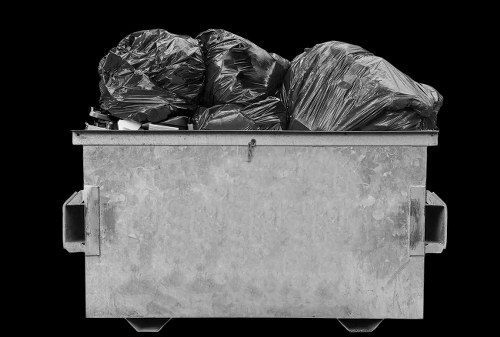
Commercial waste removal in Forest Gate needs a practical service shape: collection that fits trading hours, handling that keeps premises tidy, and clear sorting for the different materials a business produces. We provide a commercial waste removal service for offices, shops, hospitality premises, workshops and other local workplaces that need waste cleared without turning disposal into a disruption. The aim is straightforward: remove unwanted business waste safely, keep the process organised and help you regain usable space.
Our work covers mixed commercial waste, bulky items, routine clear-outs and one-off removals where materials have built up after a refit, stock change or move. We also handle more specialised disposal where the waste stream needs careful separation, such as paper-heavy office clearances or appliance removal linked to a premises refresh. If you need commercial waste removal in Forest Gate, the service can be matched to the type of waste rather than forcing everything into one fixed approach.
For a clearer quote, it helps to note the type of business, the amount of waste and whether the load includes items that need special handling. A short description is usually enough to begin, and photographs can be useful where volume, access or awkward items are involved. Being specific about what needs moving makes it easier to set out the right vehicle, labour and disposal route before collection day.
Office clearances and workplace waste
Office waste is rarely just paper. Desks, chairs, filing cabinets, monitors, packaging, old stationery and general break-room rubbish can all appear at once, especially after a move or an equipment refresh. We remove office waste in a way that keeps usable items separate from recyclable material and general waste where possible, so the clearance is more organised than simply loading everything together. That approach is useful when your premises still need to stay open while the work is carried out.
Office clearances often involve a mix of light and awkward items, so the order of removal matters. We can work through stored furniture, obsolete IT equipment and accumulated rubbish in a logical sequence rather than creating a bottleneck at the doorway. For businesses that are trying to keep aisles, reception areas or shared desks available, this type of planning keeps the removal controlled and easier to manage.
In many cases, it is best to decide in advance which items are to be removed, which may be reused and which need separating for disposal. The more clearly the load is divided, the more efficient the collection becomes. If your office waste includes confidential paperwork, a dedicated confidential shredding service can be helpful alongside the main clearance, particularly when records must be destroyed securely rather than treated as ordinary paper waste.
Mixed business rubbish from shops, hospitality and trade premises
Not every commercial clearance fits neatly into one category. Shops, small hospitality venues and trade premises often generate mixed rubbish that includes packaging, broken fixtures, damaged stock, old displays and general debris. Our mixed business waste removals are designed for those situations, where the priority is to clear several types of waste in one organised visit rather than splitting the same job into multiple collections.
For premises that produce bulky waste as part of day-to-day operations, it can help to sort items into broad groups before the collection takes place. That might mean separating cardboard, dismantled fixtures, broken chairs or redundant stock so the load can be handled more efficiently. Clear separation is not always essential, but it usually makes the removal easier to plan and can reduce the time spent working through the waste on site.
- cardboard and packaging from deliveries or stock changes
- damaged fixtures, shelving and display items
- general refuse from clear-outs and refits
- bulky items that no longer fit normal business bins
Appliances, furniture and bulky item disposal
Many commercial clearances involve single bulky items as much as loose waste. Fridges, freezers, desks, chairs, shelving and reception furniture can all take up valuable room once they are no longer needed. We remove this type of waste with attention to lifting, access and the condition of the item, so the clearance remains orderly even when the load is awkward or heavy.
When furniture or appliances are part of a wider business clearance, it is often better to think about the whole removal together. One office chair or one fridge may be easy to ignore, but several bulky items can block storage, reduce working space and get in the way of other maintenance. If the job includes larger appliances, a dedicated fridge and appliance removal page may help you match the right disposal route to the item type.
Some bulky items can be dismantled before collection, while others are better moved intact. The right method depends on the item, the available access and whether it can be handled safely without unnecessary breakage. We keep the approach practical and cautious, because the aim is not only to remove the object but to leave the surrounding area usable afterwards.
Workshops, stockrooms and light industrial waste
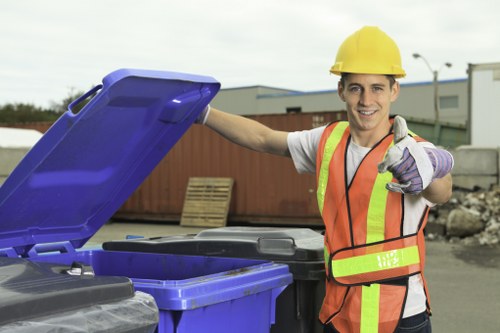
Workshops and light industrial spaces generate a different mix of waste again. Offcuts, damaged shelving, packing materials, old tools, redundant parts and general debris can build up quickly, especially where jobs are completed in batches or equipment is regularly replaced. Our commercial waste removal service is suited to these environments because it can handle mixed loads without requiring every item to be identical.
In work areas where production or assembly continues, a clearance is often most useful when it keeps walkways open and removes waste in stages. That may mean dealing first with loose rubbish and packaging, then heavier items, and finally the larger pieces that need more careful lifting or sorting. This keeps the site manageable and avoids leaving half-cleared areas that still block access.
Different businesses need different clearances, and workshops often benefit from a removal that respects that reality. Some waste is straightforward general rubbish, while other items may be recyclable or require separate handling. If a job includes materials that may fall outside ordinary business waste, a focused page such as hazardous waste disposal can help you decide whether a separate disposal route is needed before the collection is booked.
Planning a collection and understanding the quote
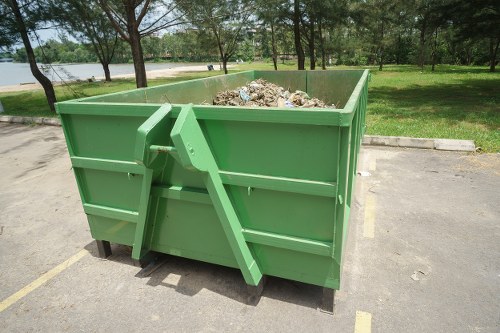 A sensible quote starts with the waste itself. The type of items, the quantity, the floor level, access to the building and the amount of lifting involved all shape the work. If waste is stacked in a basement, spread across several rooms or mixed with reusable items, that affects how the collection is planned. A useful description does not need to be long; it simply needs to say what is there and how it can be reached.
Where possible, it also helps to mention whether the business is open while the clearance takes place, because that can influence the sequence of removal. A busy reception, stockroom or shared workspace usually needs a tidier and more deliberate approach than an empty unit. If you are comparing service options, our pricing and quotes page explains how a quotation request can be framed around the details of the job rather than guesswork.
Useful information for a quote usually includes the category of waste, the approximate amount, whether anything is especially heavy or awkward, and whether access is restricted by stairs, parking or narrow entrances. Two or three clear points are enough to begin. There is no need to write a full inventory unless the load is unusually mixed or you want every item identified before the visit.
Recycling, sorting and responsible disposal
Commercial waste removal is not only about taking things away; it is also about handling the waste in a way that makes sense for the material. Cardboard, paper, metal, furniture, appliances and general rubbish may all need different routes once they leave the premises. We work with disposal that supports sensible sorting, so the waste stream is not treated as if every item were identical.
That practical sorting matters most when a clearance includes both reusable and non-reusable material. A business moving out of a unit may have desks worth keeping, shelving worth dismantling and rubbish that only needs to go. Separating those categories early can reduce confusion and make the site easier to hand back once the clearance is complete. For businesses that want to understand material handling in more detail, the recycling and sustainability page may be useful as supporting reading.
Different materials have different limitations. Some items are too damaged for reuse, some require special routing and some are better handled separately because of size or composition. A careful service does not pretend all waste is the same. Instead, it treats the clearance as a series of disposal decisions, each one matched to the item in front of it.
About Forest Gate
Forest Gate is a district in the London Borough of Newham in east London, forming part of the broader urban area around Stratford, Manor Park and West Ham. Its growth was strongly shaped by the arrival of the railway in the nineteenth century, which encouraged suburban development and linked the area more closely with central London and the expanding docks and industrial districts to the south and east. The name is associated with the former gate on the boundary of the historic Epping Forest, a reminder of how the landscape once shifted from open woodland to built-up streets. Today the area combines Victorian and later terraced housing with civic buildings, local shops and stretches of residential streets that give it a distinctly urban character. Among its best-known landmarks is Wanstead Flats, the southern part of Epping Forest’s open grassland, which provides a large expanse of public open space and a contrast to the denser streets around it. The area also sits near the great transport corridor of the Elizabeth line, with Forest Gate station linking the neighbourhood more directly to central and west London than in earlier decades. Architectural variety is visible in the stock of late nineteenth- and early twentieth-century homes, while nearby conservation streets and local shopping parades reflect the steady layering of suburban London development. Forest Gate has long had a lively community identity, with independent businesses, places of worship, schools and local facilities contributing to daily life. Its position within Newham places it close to changing parts of the capital, yet it retains a recognisable local centre and a history tied to rail expansion, suburban settlement and the edge of the old forest.
Business waste for moves, refurbishments and clear-outs
When a workplace is being refurbished or reconfigured, waste tends to appear in bursts rather than as a steady flow. Old counters, broken fittings, packaging, redundant fixtures and general rubbish can all accumulate at once. Our commercial waste removal service is useful in those moments because it can deal with a broad clearance rather than forcing each item into a separate arrangement. That keeps the project moving and prevents the site from becoming cluttered with leftovers.
Move-related clearances often benefit from a simple order of work. Items needed later should be kept apart from waste, while broken or obsolete materials should be grouped for removal. That distinction sounds basic, but it matters when the workspace is still active or when contractors are working around existing stock and equipment. A neat sequence reduces confusion and makes the job easier to complete without repeated handling.
If a premises is being emptied, it is worth identifying any items that are still usable before the clearance begins. Not everything old is waste, and not everything waste-like is ready for disposal in the same way. Home clearance or office clearance pages can also be useful references if your business move includes domestic-style furniture or a traditional office layout that needs a more specific removal pattern.
How to arrange the right clearance
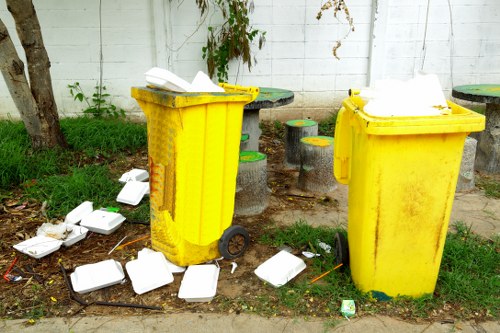
Once the type of waste is clear, arranging the collection becomes much simpler. A business can usually describe the job with a short summary: what needs removing, where it is located and whether there are access limits. If the waste includes large furniture, stockroom items or mixed materials, a rough count or a few photographs can help make the quote more accurate without turning the enquiry into a long exercise.
It also helps to think about timing. A clearance is often easiest when staff know which area is being worked on and what should be moved aside in advance. That does not mean you need to prepare the whole site, only that a little organisation can prevent delays on the day. If you are ready to go ahead, contact us for a quotation and tell us the waste type, access details and the scale of the collection.
For businesses that want a straightforward route into disposal, the main decision is often whether the waste is general, bulky, office-based or more specialised. Once that is clear, the next step is to match the collection to the items rather than forcing the items to fit a generic service. That is the practical way to keep the process controlled, efficient and suited to the premises.
Common waste types and what they mean for the job
Commercial premises rarely produce one kind of waste on its own. A single clearance may include packaging, damaged stock, broken chairs, shelving, cardboard, computer accessories and general rubbish. The value of a flexible removal service is that it can handle those combinations without making you sort everything into a single category first. What matters is identifying anything that is unusually heavy, fragile, sharp or subject to separate disposal.
Some businesses also need to clear waste created by stock rotation or maintenance. Old point-of-sale units, display materials, storage boxes and redundant signage can all become clutter when they are no longer in use. These items are often awkward rather than difficult, and that is where a measured removal helps. It allows each item to be moved in a safe order, with less risk of damage to floors, walls or adjacent stock.
When the waste is mixed, try to think in terms of clear groups rather than trying to name every object individually. A few broad categories will usually be enough to shape the collection. If you have separate waste streams, such as office paper, furniture and appliance items, those can be mentioned together so the job can be planned with the right handling and disposal route from the outset.
Why a structured clearance helps businesses stay organised
A well-planned clearance can prevent waste from spreading through a workspace and affecting routine tasks. In offices, that may mean freeing meeting rooms, corridors or storage areas. In shops, it can mean opening up display space or clearing stockrooms. In workshops, it often means removing waste that has started to interfere with movement or access to equipment. The service is most useful when it matches the working pattern of the premises.
It is also easier to manage a clearance when responsibility is clear. One person can identify the waste to be removed, another can confirm any items to keep, and the collection itself can then proceed without repeated checks. That is not a complicated process, but it does stop the removal becoming a distraction. A commercial collection is at its best when it reduces noise in the day rather than adding to it.
For premises with a lot of cardboard, packaging or similar light material, the job may appear simple, but the volume can still be significant. Light waste fills space quickly, especially when it is left in corners or behind stock. By dealing with it as part of the wider clearance, you avoid letting small piles grow into a bigger obstacle. That is usually more practical than waiting until the waste has become difficult to move.
Request a quotation for Forest Gate commercial waste removal
If you need a commercial waste clearance in Forest Gate, the easiest next step is to request a quotation based on the actual items to be removed. Give a brief outline of the waste, the premises type and any access details that matter, and we can shape the collection around the job in front of us. Whether it is office furniture, mixed business rubbish or a larger clear-out, the goal is to give you a clear and workable plan.
Some enquiries are straightforward, while others benefit from a little more detail because the waste is bulky, spread across several rooms or mixed with specialist items. Either way, a good quotation begins with the facts of the load rather than guesswork. If you are comparing options, the main question is how the service fits your waste type, your access and your timescale, not how much unnecessary process it adds.
When you are ready, ask for a quote and tell us what needs clearing. A short note is enough to start, and if you already know the main waste categories, include them. That will help us respond with a practical commercial waste removal plan for your premises in Forest Gate.